By Katie Ginn
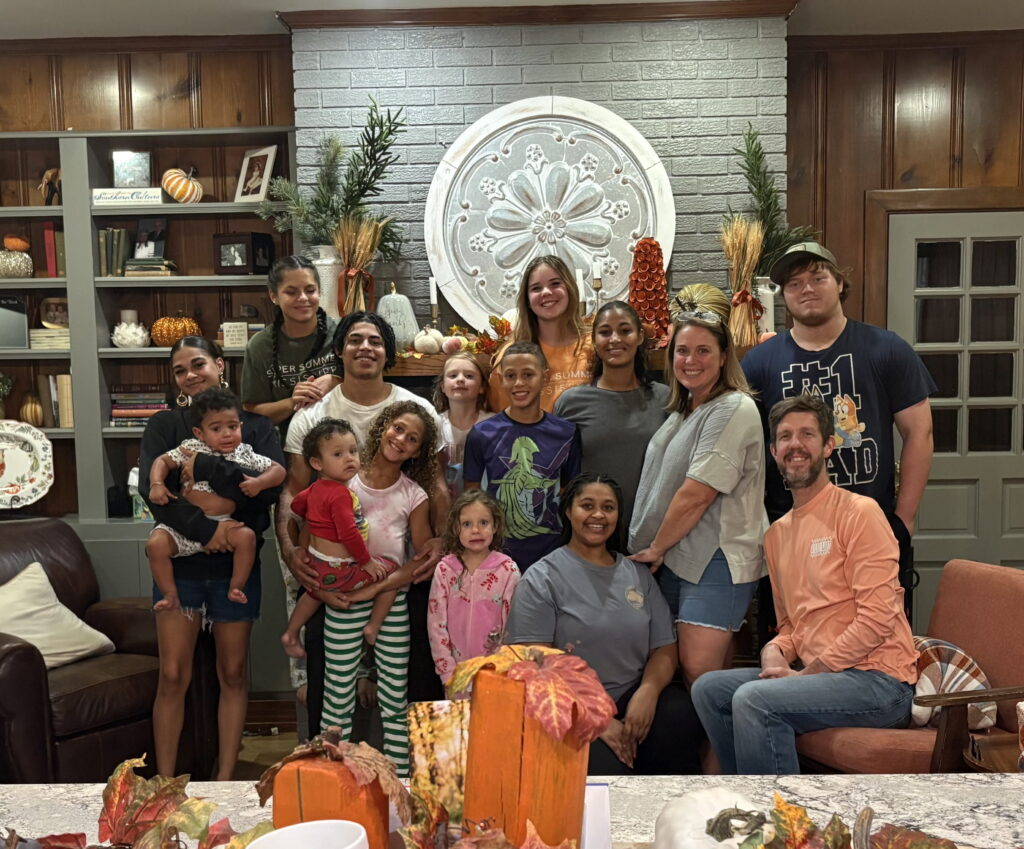
By the time Shakira Walker turned 14, she had spent half her life moving between about 20 different places – including the homes of her birth parents and other relatives, plus foster homes, group homes, and three different behavioral health facilities.
When all this started, Shakira was only 7, the oldest of four.
“We kind of got introduced to foster care when my mom left us at a playground by ourselves,” Shakira recalls. The next seven years became a blur of DHS visits, foster homes, abuse – and the birth of three more siblings, starting with Carolyn. At just a few months old, Carolyn joined the older children at a foster home in Morton, Mississippi.
“She cried all the time, because she was in withdrawal because our mom was heavily on drugs while she was pregnant with her,” Shakira says. “(Our foster parents) were not patient with Carolyn at all. We got taken from that home based off of abuse, and then we started getting separated.”
Most of the foster homes they lived in were abusive, and the siblings were often separated from each other, Shakira says.
When Shakira was 13, she and the siblings heard about the possibility of Carolyn – and only Carolyn – being adopted.
However, the Smith family, whom they knew from school, was working on getting their foster license. Maybe the Smiths could adopt them all?
“Then we heard about the Walkers.”
Obedience, or excuses?

While Shakira and her siblings were living through trauma and chaos, Lee and Suzanne Walker were trying and failing to conceive a child.
When they first got married, adoption wasn’t even on their radar, Suzanne says. But by the end of their two-year battle with infertility, “we were already talking to an adoption agency.”
Finally, thanks to God and medication, Suzanne got pregnant with Esther – and quit work when the baby turned 1. “I felt a very strong pull to help start a foster care ministry at our church. I felt like God was saying, ‘This is what I have for you next.’”
Lee continues: “Once that seed was planted, it felt like a very clear call. Were we going to be obedient, or make excuses?”
They could’ve made one excuse: The goal of foster care is for the child to reunite with his or her birth family whenever possible. Who wants to pour their heart into a child, only to have them ripped away?
“You cannot remove your heart from that equation,” Suzanne says.
But the Walkers stepped in anyway, starting in 2015. Their first foster placement was a little girl who stayed with them about 18 months, during which the family moved from the Jackson area to Tupelo.
When it became clear that their foster child would be returning to her biological father, Suzanne followed the Mississippi Heart Gallery Facebook page, “which (spotlights) kids who are in foster care but available for adoption. In other words, the termination of parental rights has already happened. The majority of those are older children,” she says.
That’s where she saw a post about Shakira and five younger siblings, who by then were living in a Baptist Children’s Village group home.
“I made a call to Lee, he didn’t answer – so I called the social worker,” Suzanne says, laughing. (“I would not have said no,” Lee says with a smile.)
Suzanne asked the social worker, Heather, for more information and found out there was a seventh child now. The Walkers, after their own foster child left, visited the siblings at the group home in October and November 2016. Then, around Christmas, six of the seven siblings (all but Elizabeth, the youngest) spent the night at the Walkers’.
After that visit, Heather asked Lee and Suzanne, “Are you still interested?” Yes, they were. They still wanted to foster these kids in pursuit of adoption.
“Sometimes you reach a crossroads in life,” Lee says. “(And you wonder), why do we have the house we have (with room for lots of kids)? Why do I have the job I have?”
When family and friends found out, “the first reaction from almost everybody was concern for us,” Suzanne says. “(But) one of my sisters said, ‘This is fantastic. You’re going to crush this.’ That was encouraging.”
At first, the judge handling the siblings’ case wanted to let them stay at their current school through May.
Then he decided to move them by January. Which was a week away.
“We had a lot of people rally around us,” Suzanne says. “They gave us (so many items we needed). A friend of ours who owns several car dealerships helped us get a 15-passenger van.”
In January 2017, the siblings arrived at the Walker home for a six-month foster placement, which the state requires before the adoption process can begin.
“One day we had one child, and then the next day we had eight,” Lee says.
Meanwhile, Shakira and her siblings had wanted to be adopted by the family they knew from school, the Smiths. But if they’d waited for the Smiths to finish getting their foster license, Carolyn would’ve been adopted by another family.
So, they’d agreed to go to the Walkers. Shakira told her siblings she’d chosen the Walkers because it snows in Tupelo. “I knew if I told them all the (real) details, they wouldn’t understand,” she says.
The younger siblings were upset – while Shakira had even more on her mind. The older a foster child gets, the less likely it is they’ll be adopted. In fact, according to one social worker, “the likelihood of all of us being adopted together was very very slim,” Shakira says. She assumed the adoption would not include her.
Mistrust and the ‘savior’ mentality

Before that January, the Walker family was made up of Lee, Suzanne, and 4-year-old Esther, the child they finally had after battling infertility.
“It was very easy (as a family of three) to say, ‘Do you want to go out to eat tonight?’ and go out and do things,” Lee recalls.
“Then (with eight kids) it becomes a cruise ship, and you can’t turn it around very easily.”
The other big challenge, for Lee, was “trying to show (your new) kids that you want to parent them and love them like a biological parent.”
Suzanne remembers suddenly becoming a parent of teens – and having to discuss “cell phones, dating, boyfriends, substances … things we didn’t expect to have to deal with for several years.”
In addition, “we dealt with every type of behavior. In the training, they teach you about all these behaviors, and you think, ‘I hope we only have to deal with one or two of those.’”
Because Shakira didn’t expect to be adopted with her siblings, she didn’t bother getting to know her new parents. “I was very skeptical,” she says.
“(I was mostly) watching their steps and how they kept my siblings – because I’m really protective. I raised my (three closest) siblings all the way up. So I didn’t really give the Walkers any chance to kind of prove themselves to me.”
Lee took the brunt of Shakira’s mistrust. “Me and my dad, we constantly butted heads. I hated his guts,” she says.
All seven siblings were adopted in November 2017 – to the disbelief of Shakira, who thought, “How could they want to adopt someone like me?” After all, from ages 8 to 11, she’d had 35 stays in three different behavioral health facilities.
Even after being adopted, Shakira kept having “issues” with just about everything Lee did, she says: “the way that he would discipline … the way he would correct, the way he would teach.”
Zeke, Shakira’s oldest brother, had similar problems with Lee. “Me and (Zeke) had the worst end of the stick of foster homes. We were abused more,” Shakira says. “(That caused us to) really lash out.”
Suzanne says that lack of trust was an unpleasant surprise. “I thought after a year (the kids would see that we loved them). That’s something we assume when we come from a healthy background.”
Foster parents can often have a “savior” mentality, Suzanne says. However, “the training we went through said, don’t expect these kids to be grateful.”
Whether a child just wants to go back “home” or refuses to trust adults due to past experience, “You have to be able to hold them and hear them say hard things.”
‘Silent grief’ and joyful surprises

Not all of the surprises have been bad.
“God gave me a personal joy of cooking, which I did not have before (adopting),” Suzanne says. “And we did not expect (our adopted kids) to sleep as well as they did.”
For Lee, “one of the most positive surprises for me was what having this many kids did for our marriage. It forced us to make sure we were taking care of each other.”
One challenge has been learning to adapt his parenting style to each kid, he says.
“It’s easy to think (that) how you parent (your first child) is always going to work. But when you have eight (kids), and now nine and 10 … I have to tailor the way I parent (each one).”
Yes, you read that right. The Walkers now have not one, not eight, but 10 children, thanks to two of the biggest surprises in this whole story.
After giving birth to one child and adopting seven more, Suzanne says, “the desire to have another (biological) child was in me but felt insane. That was a very personal, silent grief that I carried with me. And then God gave us Miriam (with no medical intervention).”
Suzanne and Lee watched as their adopted kids – especially the older ones – were clearly wondering how this would go. Would their new parents ignore them in favor of an infant with Walker DNA?
“After we brought her home, and we had a newborn but nothing (else) changed … there was a measure of trust,” Suzanne says. Two years later, Evelyn was born – again with no medical intervention, besides an emergency C-section – “and she’s been making us all laugh ever since.”
Even so, the adopted children are still learning to trust, Suzanne says. “The things we’ve said we’re going to do, they’re watching to see if we do it for all the kids and not just some.”
Those things include parameters around cell phones, vehicles, and college tuition. While the Walkers’ parenting style has to stay fluid, they’ve kept their rules basically the same, “from the one who’s 24 (on down),” Lee says. “We’ve tried as hard as possible to be as consistent as possible.”
Lee points out the Bible’s repeated promise that God the Father shows no favoritism. “I think any parent with more than one child has to navigate that. That need has been acutely heightened (since some of our kids are adopted).”
It’s not just adoption that makes the Walkers hyper-aware of loving their kids equally. It’s also race.
“That has always been an opportunity to focus on their heart and their character and say that’s exactly what God looks at,” Suzanne says. It helps that “our church has loved all members of our family.”
Still, there are things that she and Lee have had to learn. “I asked a lot of African American women how to do hair,” she says.
One thing that’s helped: “Anytime the kids made a friend, it didn’t matter what the race was, we tried to meet the parents. I think that showed (the kids) that we weren’t going to shy away from people of other races.”
Ultimately, no parent knows how all their decisions and actions will impact their kids – at least not for a while, Lee says. So how have the Walkers kept from worrying themselves to death?
“I think this is where our faith becomes so important, because you can spiral so quickly,” Suzanne says. “Especially if our child is making poor choices and putting themselves in danger … and we went through that with one or two of our kids, and I still had seven or eight kids to take care of. It’s a lot of prayer, a lot of surrender.”
Lee says having a large family “has expedited our learning (that) God is in control. So, having the faith that God is good and in control. Romans 8:28 is not this ambiguous verse in a cloud anymore.”
‘(They) never gave up on me’
At 18, while still living with the Walkers, Shakira regained communication with her birth parents. At 19, she moved in with them. At 21, she was pregnant, getting to know her now husband, Joshua – and finally coming to a saving relationship with Jesus.
“I believed I was a Christian (before, but) I became an actual Christian by being born again,” Shakira says. “It opened my eyes to a whole other reality: my adopted parents and what they were trying to do for us, the unconditional love they gave us.”
She remembers seeing Suzanne for the first time after being saved. They were shopping for baby clothes. “She could tell my attitude had changed,” Shakira says. “I could see it on her face.”
After giving birth to her son, Hezekiah, Shakira brought the baby to visit the Walkers. It was then she had a conversation with Lee. “I think he could also tell the change in my attitude (and) my sincerity.” Shakira is building a closer relationship with each of her adoptive parents today.
Looking back on her teen years, “Even after we argued, especially Dad, he never yelled at me. He said a couple of things that hurt, but he always apologized. And he was very tenderhearted.” At the time, Shakira didn’t see that.
“(Now) I definitely appreciate how he never gave up on me. And I’ve told him that: ‘You pushed me to be a better person.’ … So every time I see him, I say, ‘I’m so grateful that you’re my Dad.’
“And Mom too. We both females, so emotions stay high. (laughs) We’ve bickered a couple times … but I’ve even told her, when I gave birth … how grateful I was that she was my mom. That she never gave up on me.
“I will be forever grateful (that) God gave us a family who cared.”
Tips for couples considering foster care or adoption

From Suzanne:
- “If you and your spouse are not on the same page, don’t do it.”
- Be flexible.
- Be organized.
- Change your expectations. Suzanne would’ve loved for all her kids to attend church in pristine matching sibling sets of clothes. That’s definitely not happening!
From Lee:
- “If (God) has revealed to you that your calling is to foster or adopt, He will give you the strength you need. He won’t make it easy, but He will be your rock.”
- “Look into it further. The blessing is far greater than any difficulty.”