By Katie Ginn

I recently sat down with three licensed professional counselors (LPCs) who love Jesus and strive to help people live by His design through mental health. J. Nelson and Kristin Odom specialize in teens and young adults, and Stephanie Smith-Jefferson has over 40 years’ experience with families, children, and individuals. We talked about how they got into the mental health field, the issues they’re seeing with their clients, what helps – and how to tell the difference between normal stress or sadness and needing a counselor.
J. Nelson, LPC


- Stillwaters Counseling, Ridgeland
- Recently became a counselor after serving in youth ministry for many years
- Teens, adults, premarital and marital counseling, grief counseling
Kristin Odom, LPC

- Central Care + Counseling, Ridgeland
- In the mental health field since 2005
- Sees couples, adults, kids 15 years and up
Stephanie Smith-Jefferson, LPC
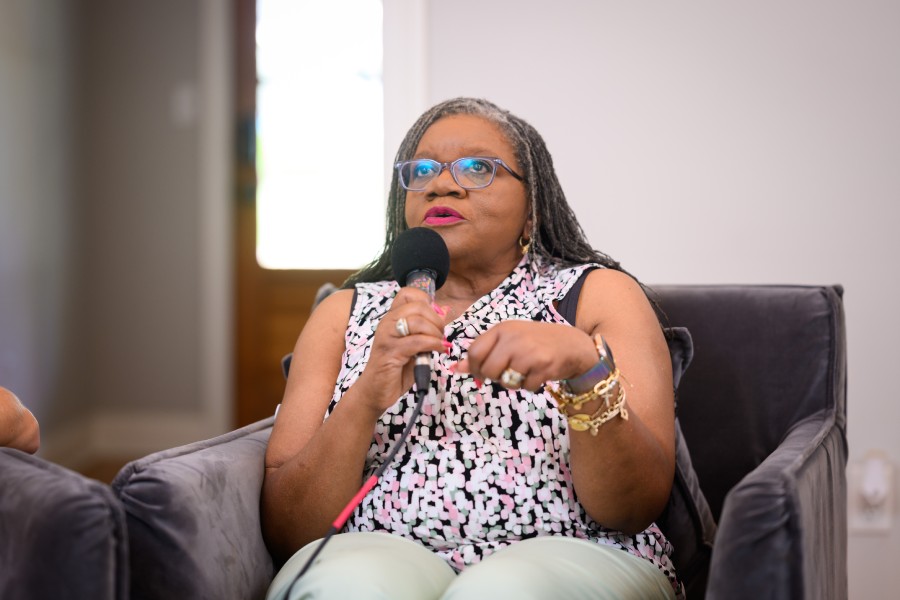
- Crossroads Counseling (Pearl and Ridgeland); Red River Counseling, Ridgeland
- In the mental health field for 40-plus years
- Families, children, individuals
Katie Ginn: How did each of you get into the mental health field?
J. Nelson: The issues (I saw in my years of youth ministry) changed. It went from, ‘Hey, my two sons aren’t getting along, would you talk with them?’ to, ‘(My child) is having some really dark thoughts.’ That caught my attention. I didn’t know what to do with it.
So, well, if you’re going to work with teenagers, how can you be better at doing that? And (counseling) seemed like the natural next step.
KG: Stephanie, you were a genetic counselor first, helping people assess their risk for inherited medical conditions. What made you transition into mental health counseling?
Stephanie Smith-Jefferson: God. (laughs) My plans and His plans don’t always align, but He always wins.
When you get a diagnosis, there is a question mark. I saw the effects that a diagnosis could have on a family. I wanted to do more to help. So I started a doctoral program in psychology at Jackson State (University), stopped that … (and) I was at the gym, working out with my trainer, and I fell and broke my arm.
And God said, ‘I want you to do marriage and family therapy.’ And I had some friends who were going to do that, and I was like, ‘I wish you well. That’s not something I’m interested in.’ However … while I was sitting at home, couldn’t do anything, He said again, ‘I want you to do this.’
And at this point, I thought, well, I don’t want to break another arm or anything else, so what do You want me to do? So I applied to the program at Reformed (Theological Seminary) and got in, but I thought, ‘Lord, I’m just not interested in people in their marriages!’
But I realized there were so many more things I could do … so I specialized in (a variety of) things. And so I actually love it.
KG: Kristin, what about you?
Kristin Odom: I’ve known (I wanted to be a counselor) for a long time. My mom is an LPC. I did a lot of substance abuse (work), I worked in and out of jails and drug courts … (Then) I took a few years off to have kids, raise them, and I was helping with the preschool ministry here (at First Ridgeland Church).
We were in a staff meeting one day … and someone around the table said, ‘Hey, it’s really been on my heart to open a counseling center.’ … No one really knew I was from a counseling background. … I had no intentions of getting back into counseling.
(But eventually) when somebody said, ‘Hey, does anybody know an LPC?’ I was like, ‘Oh, that’s me.’
KG: Does Central Care + Counseling operate any differently than a non-church-affiliated counseling office?
KO: No. We serve the general public. We don’t only serve our congregation; we don’t not serve our congregation. Church members are clients like anyone else.
I will say, being associated with the church has brought a lot of church staff to seek counseling.
KG: Is there ever a conflict of interest?
KO: All the time. I’m referring out (to other counselors). The other two therapists (at Central) do not go to our church. … If I have your phone number, if I have done life with you outside of this counseling room, we will not enter into that (counseling relationship).
KG: Stephanie, what was it that made you realize you could get excited about mental health counseling, after God nudged you to make that transition?
SSJ: Just helping people in a time of crisis or whatever they were going through. And that was happening in genetics (counseling) … So that transition for me was almost a natural thing.
When you’re getting a diagnosis, it’s going to have some effect on you … just the fact that there’s something wrong, there’s something different about me. (And) we’re getting deep into your family history. And we’re asking questions that you may not be ready to answer.
So the same thing happens in a counseling session – reviewing information from you and digging around … collaborating together to try to find an answer.
KG: J., I guess you have a similar boundary as Kristin – you don’t see clients if you’re also their youth minister?
JN: Correct. … I have seen some people now from a church that I used to work at, depending on what the issue is. … since I’m no longer there.
(Also) I tell people: If you see me at the grocery store, if you acknowledge me, I will say hello. If you don’t, and you’re with somebody, I will walk right past you … (But) I see you, and I know you! But it’s your call whether you want someone to know this part of your story.
KG: Kristin and J., for teens, and Stephanie, for adults, what’s the biggest issue you see your clients struggling with?
JN: If we’re talking about teens and we’re not talking about anxiety, there’s a likelihood that we’re missing something.
I remember a student years ago … he started football at 6 a.m., went to school, went straight from that to a drama rehearsal, a lot of times his mom would bring dinner to him, and he routinely got home at 8, and he hadn’t even looked at whether there was homework.
A lot of people would say that’s not good, but then you look at a lot of students, and that’s where they are.
KO: (For teens) I would completely agree with J. (about) anxiety. I would also add self-value, worth, and identity. They don’t know who they are; they don’t know whose approval they’re trying to achieve, and every little experience – school, sports, church – is making them question, do I belong? Am I accepted?
SSJ: (For adults) there’s lots of depression, lots of anxiety … I also do a lot of trauma work. And I do sex therapy. There are a lot of things … and a lot of times there are people who have unresolved things from their childhood, and now they’re married, and those issues come up.
KG: In other words, if they had seen someone like J. or Kristin when they were younger, they’d be much further along in their mental health?
SSJ: Yes, much further along.
KG: What have y’all seen that works well for your clients?
SSJ: More than anything … just to let them know that you care, and to keep them from feeling like they can’t be helped.
KO: A phrase that I use a lot (with teens) is, ‘Secrets keep us sick.’ That can mean activities that you are engaging in that you feel like you would get in trouble for. Maybe you are cheating on your boyfriend. … Maybe you believe you’re ugly. Maybe you hate your parents.
Whatever is eating at you secret-wise, it’s keeping you at a place of a repeated cycle … Sometimes they build it up, like, ‘I don’t know what you’re going to think,’ and then they tell me, ‘I stole a piece of something from my friend,’ and I’ll be like, I thought we were talking about –
JN: You murdered somebody.
KO: Yeah, like you murdered someone (and) we need to call your parents. And that’s another thing … If you’re feeling suicidal or homicidal or a threat to yourself or others, I have to tell your parents. I’ve had a couple (of teen clients) get real mad at me (for that and say) they’re never coming back … and the next week they’re back.
JN: For me, the word that has been helpful for me is, be curious. There’s already been so much judgment for (teens), whether in their head or from their friends. (So) when they come to us, I try to say, I’m genuinely curious (instead of judging them).
I heard a guy say, ‘I don’t particularly like talking to teenagers. They just won’t talk to you.’ And I was like, ‘Yeah, they will! You’ve just got to ask different questions.’
KG: How can people tell the difference between a ‘phase’ of stress or sadness, versus needing to see a counselor? For themselves or for their teen?
KO: Look for a decrease in daily functioning. (That is) subjective to what their lives looked like before this episode …. Teenagers are moody and have mood swings, and it takes a little more time (to tell). But I think with adults, a decrease in daily functioning and a decrease in social support (would) mean it’s time for the next step of care.
(For teens or adults) there’s a difference between stress and anxiety. Stress is marked by a situation ending: I have a test coming up, I have a wedding coming up, I have an event coming up. … If that event occurs and I can breathe deeply … I have moved on.
The thing with anxiety is, as soon as that event is over, I’m stressed about (everything else in my life). There’s never an ending point.
SSJ: Think about, when have you experienced these feelings before? What were the circumstances? Was it similar, was it different? What did you do at that time, how did you get through it … or are you still in it? Did you have someone to help you? Did you go to therapy?
Then also I’ll ask them to grade it. Zero is kind of out of sorts – maybe it’s the weather. All the way up to 5. Five is, I just don’t want to be here. So we examine what ‘here’ means. Does ‘here’ mean in this office, or ‘here’ in life?
And what is it that you think you need to move from 2 back to 1.8? What do you need to feel just a little better? Do you have someone to help you with that? … (How) will you know when you’re at that point? Then you can use that to go to the next point.
JN: I’ve got three teenagers at my house. So the piece I would add to what (Kristin and Stephanie) said is, (teens) need someone to hope. To say, I’m not trying to minimize (that) this season is tough. But there is hope. For those of us in the room, we say there’s hope in the person and the work of Jesus.
(And) I don’t think you’re going to hurt yourself by going to see a counselor. … I love going to the doctor. I get my checkup every year, (and) it’s great when he says, ‘You’re trending in the right direction.’ That doesn’t mean I don’t go the next year.
There are moments when if people make a habit out of routine counseling … I’ll share a bit of my story. Things were fine in my life. I was dealt a good hand. … And then, a few years ago, my older brother ended up passing away. … So I was doing OK, until I wasn’t.
And then you have somebody like a therapist or whoever it may be who’s got this baseline for you, and they can say, ‘OK, something has changed.’ Essentially, I was getting wellness checkups, and then all of a sudden, something changed.
(Just) go. It’s not your job to know (all the clinical signs).
KG: For me, if I had never gone to counseling and wasn’t sure I needed it, I’d be afraid, ‘What if I’m wasting their time?’
KO: It’s worth a 50-minute session to say, do I need this or not? Because if you didn’t need it and you went, that’s better than if you needed it and didn’t go. You’re not wasting my time. I’m sure you’re not wasting (J.’s or Stephanie’s) time. (Agreement all around)
KG: Do y’all have any success stories you can share (without client names), or things that have encouraged you?
KO: I’ve spent probably five years with a client. (It was) tough, hard, heavy, and (I thought), are we ever going to get over this? And five years later, it’s better than I or the client could’ve ever imagined. (So) stick it out. … A lot of times it gets worse before it gets better.
JN: When you see a lightbulb go on, I can’t have a bad day after that happens. … And when they’re like, I’m not where I was. You’re so proud of them.
I have a client who just kept showing up even when they didn’t want to. What they were working through seemed impossible to them. … It was like they walked up to a wall and looked up and couldn’t even see the top of it. And they haven’t gotten over it yet, but they’re still climbing. Some days it’s two steps up, and some days they come in and say, I think I lost a few steps. But, they say, ‘I haven’t let go yet.’
SSJ: It’s encouraging when you get the feedback from clients about, ‘This really helped me.’ Something you’ve been talking about for months, and they finally decided, I’m going to take that step.
Every once in a while, I’ll see someone I haven’t seen in years. And they’ll come running up, and I’ll say, ‘Remember, old lady here, I’m going to break a bone.’ They’ll say, ‘You helped me with such and such.’ I saw (a former client) at a gas station the other day. I said, ‘Let’s put the nozzle down first, and then we can speak.’ (laughs)
We are hope merchants in some ways. But we do that with our clients. They think we do the work, but no, they’re the one that does the work. We’re here to walk with you and cheer you on.