By Katie Ginn
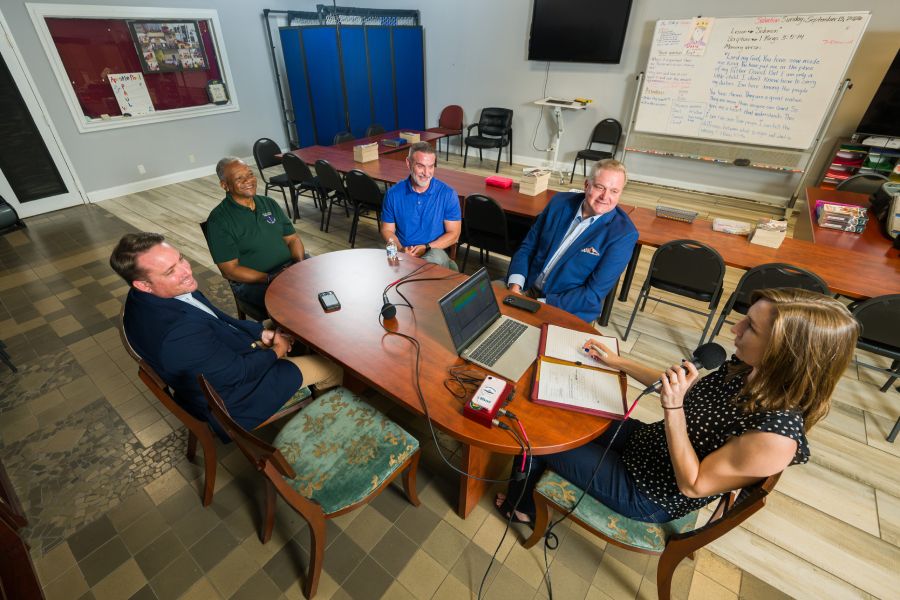
In honor of Pastor Appreciation Month, MCL Editor Katie Ginn recently interviewed four pastors from the Jackson metro area. They discussed their biggest challenges, how you can encourage them, and how we should be thinking about AI, among other topics. We had to cut a LOT for print, so check out MCL’s “A Closer” Walk podcast on Apple Podcasts or Spotify to hear the full interview!
Meet the pastors
Dr. Matt Ayars

Lead Pastor of Wellspring Church in Gluckstadt for three years
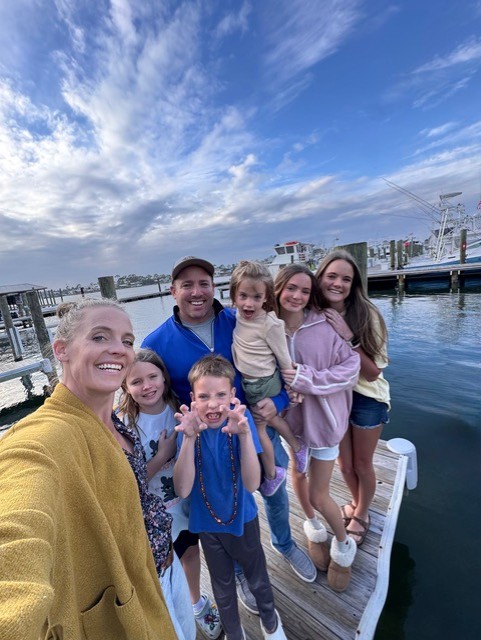
Rev. James Henley
Pastor of Fresh Start Christian Church in Jackson for 22 years
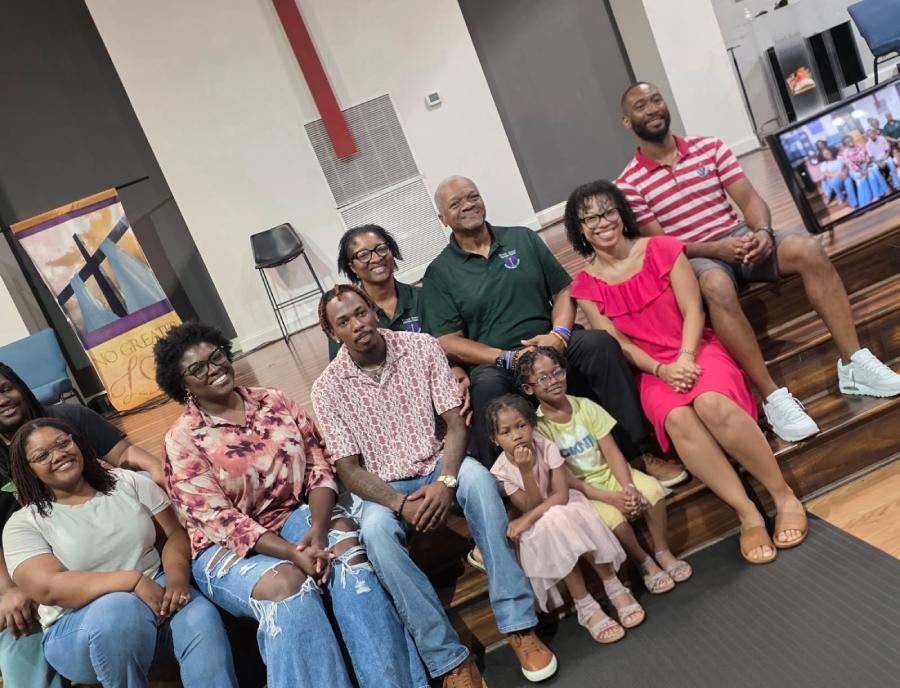
Dr. Breck Ladd
Senior Pastor of First Baptist Madison for three years
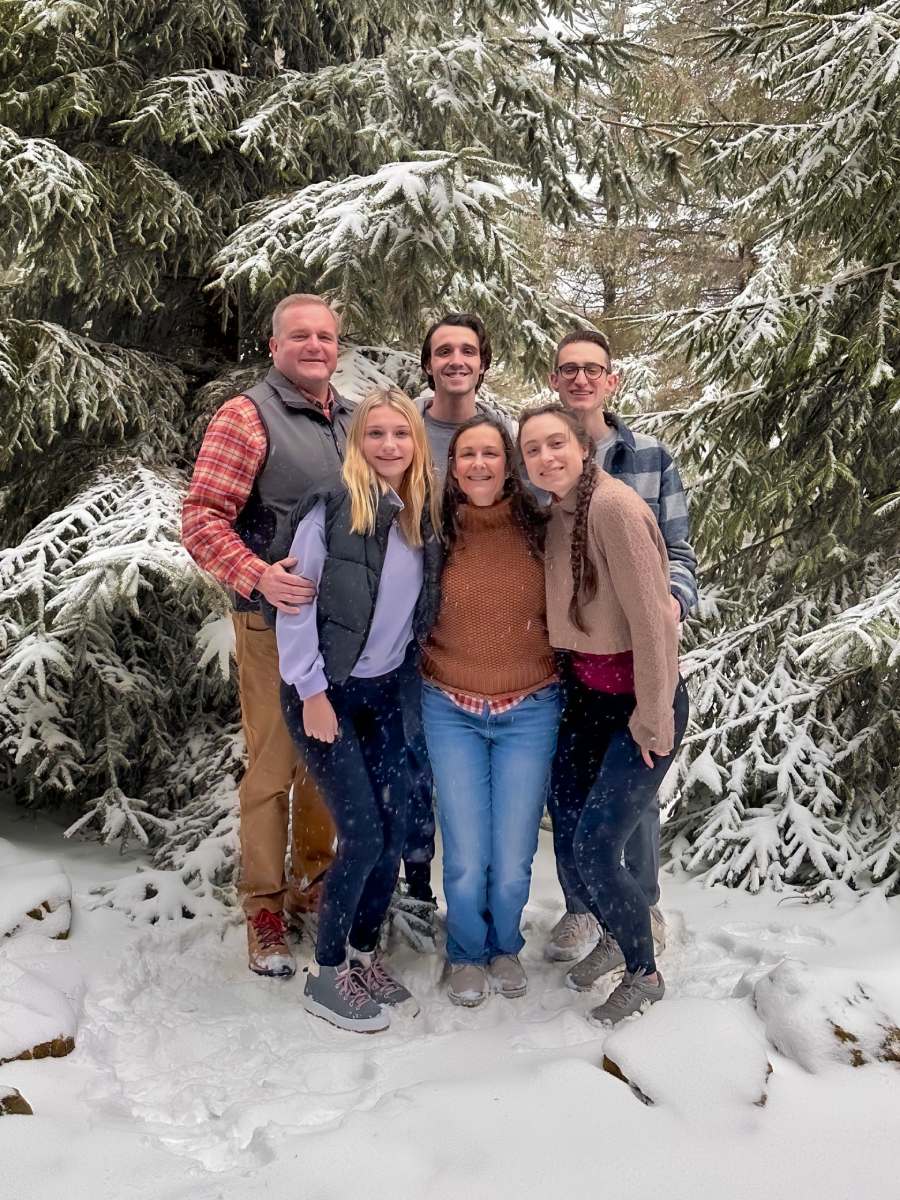
Rev. Tyson Taylor
Senior Pastor of Lakeside Presbyterian in Brandon for 10 years
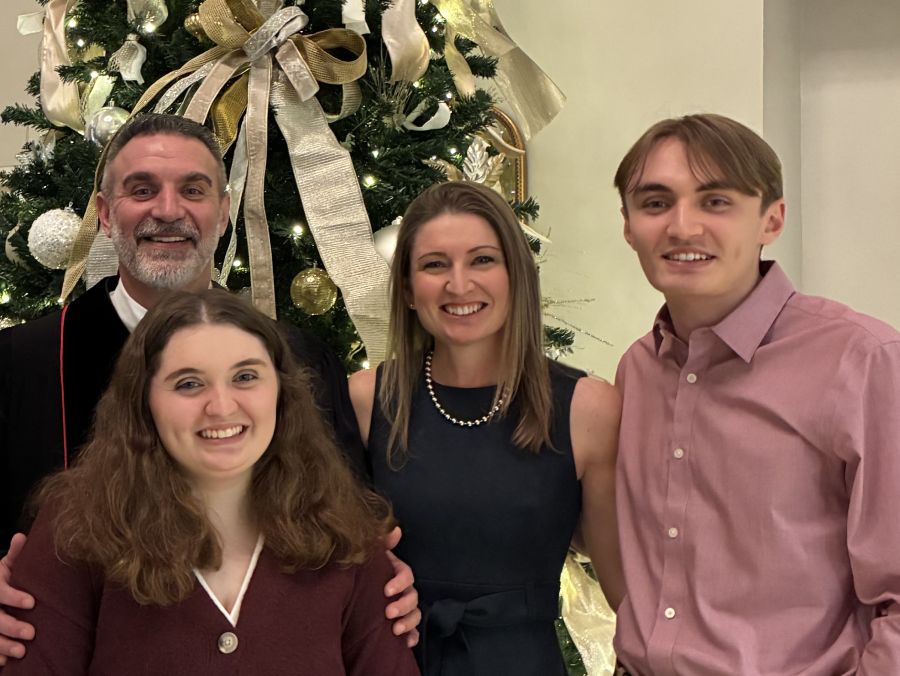
Katie Ginn: What is the biggest challenge you each face as a pastor?

Breck Ladd: Time management. Balancing the study with pastoring people, to be able to be there for people and shepherd them and be in the middle of their lives – not just when there’s a crisis, but to really get to know them and spend time with them. That’s where ministry happens.
Tyson Taylor: You want to be more involved in more people’s lives than you really have the capacity for. (Your) maximum output is maybe 100, 150 people. And so part of being faithful in discipling these people is making disciples who make disciples, so you’re duplicating yourself …. And that can be a big challenge.
James Henley: For me, it’s planning transitions. My goal is in four more years to have somebody else sitting in this chair. And working on that, while at the same time ministering, figuring out how to (prepare the church) so the people would be accepting of the person who comes after me – just praying about that, with the rest of the stuff you have to do. My challenge is finding that person.
Matt Ayars: The primary call is to let Jesus live His life through us. And He’s dying for the world, suffering for the world, to show the world the love of God. And as He’s living that life through the pastor, that means we suffer. Jesus enters into suffering with people, so we have to do that too … whether that’s through the prayer life, the phone call, the extra visit.
KG: What’s the best way for church members to encourage you as their pastor?
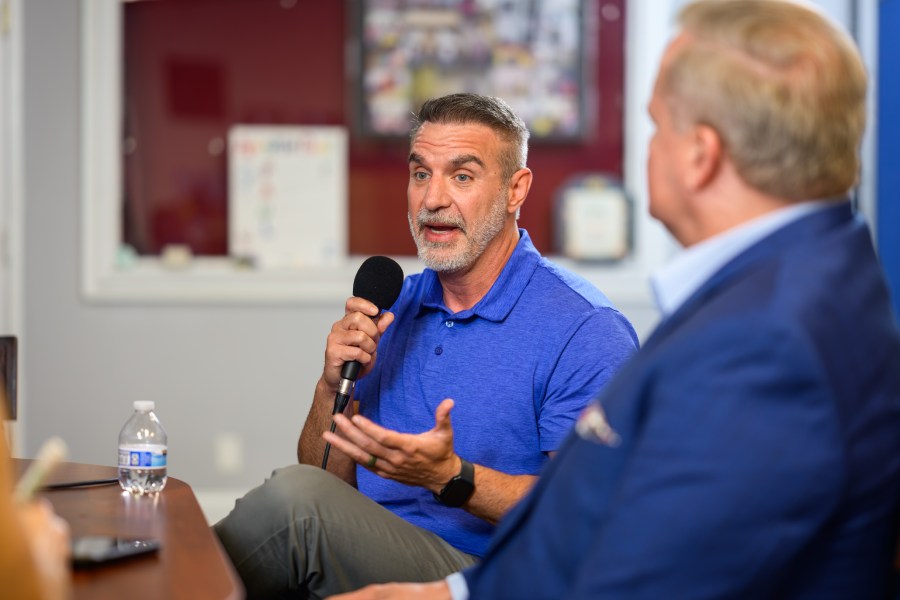
TT: I’ve got some great encouragers in my church. Every Sunday, I get way more attaboys than I ever get criticisms – and I need to. Sometimes when someone says something about my preaching that I’m kind of afraid might be true – like, ‘I like what you’re doing, it’s really intellectual, but it’s kind of boring’ … for every one of those (remarks) I need about a thousand attaboys. And I need people in my congregation who are praising me for faithfulness and not talent.
MA: One of the most encouraging things that happened at my church recently was a young couple who are relatively new to the church (said), ‘We want to start a small group.’ That was a huge boost to me. Because it wasn’t consumeristic Christianity. And that’s not to say that people at Wellspring are. But there is a tendency with the fallenness of humanity to be consumeristic, even as we approach our faith.
I love when people feel called to volunteer … (The) whole idea of 10 percent of the people doing 90 percent of the work, it’s not sustainable.
BL: I had a gentleman who was a retired pastor who said, ‘I’m going to start coming here and praying with you.’ He’ll stop me at church and pray with me. And that is such a powerful moment and a time of encouragement to be reminded that we’re not alone. (Also), we’ve got some folks that love my family well. They ask about them, they reach out to them, they check on them, and they encourage them.
JH: We do a lot of outreach ministry. We go to three elementary schools every month to just uplift the whole staff. I’ve got new people who said, we’re going to start going with you. And literally, that knocks out one of the three schools, because now I’ve got a whole team that can go there, as opposed to me and a group of people running around to all three. (When I see that), I just say, ‘Thank You, Jesus.’
KG: How should Christians be thinking about AI?
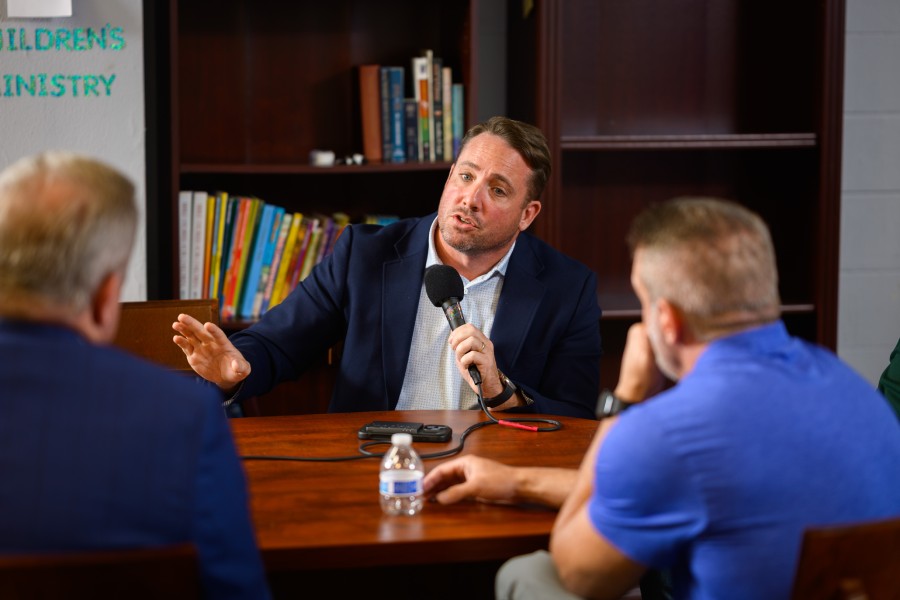
MA: (I think the) question is, what does it mean to be human? Jesus is the true human. (He) not only reveals the Father but reveals what we’re supposed to be …. And what motivates His obedience to suffering is holy love. A robot will never have holy love.
Another layer (is) the difference between information and transformation. … AI can provide information. But transformation occurs at the place of personal relationship where holy love is present, at the place of the cross.
TT: If I’m trying to understand how far Bethany is from Jerusalem, and I need to know quick, I can ask AI … (But I) probably ought to go and make sure that’s true somewhere else.
I think the sin is, ‘Hey AI, write me a sermon on Mark 2.’ And then (the preacher) cleans it up a little and presents it as his own. There’s a dishonesty in that, but also, the Word of God is meant to be preached by someone indwelled by the Holy Spirit. AI is not indwelt by the Holy Spirit.
I did a Bible study the other day, and I said (to AI), “Help me create PowerPoint slides.” That allowed me to go to the hospital (to visit a church member) – which is probably where my people would rather me be than making slides.
BL: Our own convention board put out something called Gospel Coach. So you can go into Gospel Coach (and) say, hey I’m reaching out to a millennial who (fill in the blank). And it will show, don’t say that, say that. It’ll actually coach you along.
Our International Mission Board has an app called Faith Bot. And we’re releasing it into unchurched areas, and we’re letting that do some of the work of evangelism. Now, I want to be careful. That, to me, gets kind of right on the edge. But again, there’s no gospel witness there. And (the app) ultimately is going to tie them back to a person who can be on a Zoom call.
I think the (biggest question) is, is this drawing me closer to God and to His people, or is it pushing me away? It should not be a substitute for the fellowship of the saints and the time alone with the Lord.
JH: I interned at IBM in college (and came back and worked for them later). We were selling software that ran on hardware. But there was an operating system that controlled the hardware. Well, the Holy Spirit is my operating system. He wakes me up; He tells me what to do.
In some ways, (AI) doesn’t have any outside guidance, (because) it’s being programmed to teach itself. So there’s nothing it downloads that can say, this is wrong. The Holy Spirit downloads to me all the time when there’s a defect (in my character).
I tend to use (technology) a little bit slower until I find out who’s behind those programs. … What’s their background? Because in the end, that’s what’s going to run through their system.
I think (AI is) a beautiful tool. I use it, sparingly…
KG: What is the biggest challenge facing the American church today, and what can we do about it?
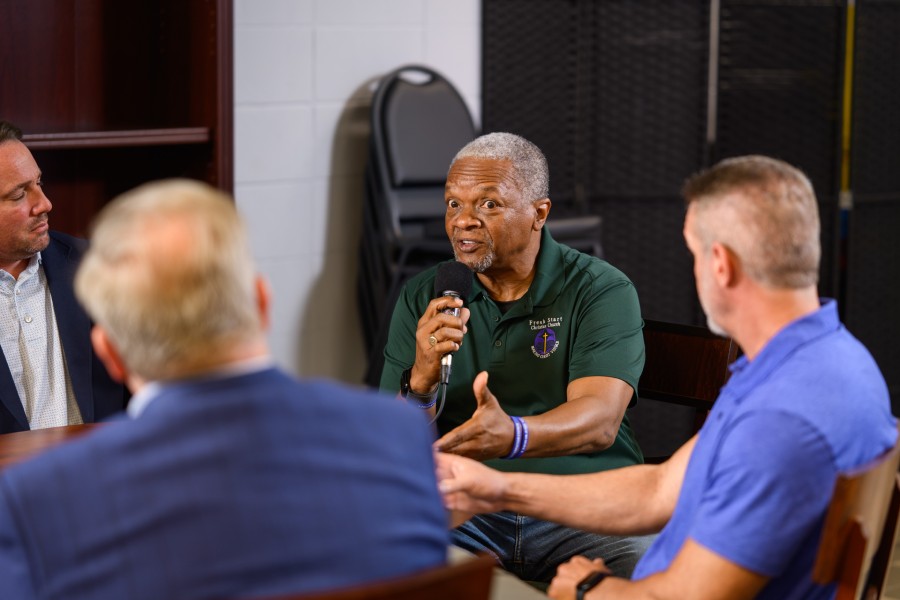
JH: Diversity. Because while we say there’s one Christ, sometimes we act as if His love differs based on which group we’re in.
When I was in the fourth grade … when we came back (from Christmas break), there were people who looked like y’all in my school. But in church culture, we still get to choose where we worship … And sometimes we don’t see the need to get outside (our) circle.
And sometimes it’s diversity of economics, not just race, because even within my (own race), I have friends to this day say, James, why are you fooling with those people over there? (And I say) because God likes them. He wants me to like them and love them too.
We intentionally had a Caucasian youth pastor (at our church) our first 10 years. Why? So that all these kids that came in here saw that, (despite race) ‘He’s just like me’ and interacted with him. We’ve got to be intentional sometimes. Because Jesus was intentional. He came down here on purpose to save a wretch like me.
TT: The biggest danger in the church is often (false teachers) inside the church … I think there is a movement of people in the (American church) that is embarrassed of the moral teachings of Jesus Christ (and) scripture, so they’re trying to repackage it (with) secular humanist morality.
What can we do about it? We can pray. But also, Christian education in our churches. Discipleship. I believe the worship service is for Christians. Everyone is welcome, but our target is edifying the church.
Something happened in the ’90s … the seeker-sensitive movement. We didn’t use church words. We used phrases like ‘relevant.’ (And) we quit edifying the church. (Now) you have a whole lot of Christians (who), no matter what I say about Jesus, they’re going to applaud, even if it’s wrong … they don’t know the difference.
BL: I read a study that said in 2025, 50 percent of evangelical Christians (who attended church) thought the Holy Spirit was a ‘magical force’ instead of a person. And 53 percent believed that God was honored by the worship of all religions.
So if we can get back to (the Word), what does Romans 12 say? You’ll be transformed by the renewing of your mind. So that’s the answer to the diversity issue; that’s the answer to all of those issues for me.
MA: When I was serving in Haiti, (even) when someone becomes a Christian … if a snake goes by, everybody panics and runs out, because ‘that’s a demon.’ It wasn’t really Christianity. It was still Haitian voodoo animism with Christian wrapping around it.
So what I think is the biggest threat (to) the American church is exactly what y’all are saying. I would call it syncretism. It is a sort of materialist, Marxist worldview wrapped in Christian language that says the goal of life is freedom, comfort, material success … and then we leverage Christianity (to meet) that goal. It’s more like a folk religion than biblical Christianity. (We) have to just return to a steady diet of biblical teaching.
(Also) we’re too busy as Americans. I think that’s what’s keeping people out of the church. And why are we so busy all the time? Because we have a syncretistic worldview that combines materialism with (Christianity).
Yes, Christ was busy – but only doing what His Father asked Him to do. This is not (about) who can gather the most wealth. And we have to teach people to lose that (view). And it’s impossible (so) we ask God to do it. (laughs)
TT: I’ve heard of this thing called neuroplasticity. That’s the brain’s ability to memorize at certain ages of childhood. Catechism is a historic church practice of taking our children, and, through a series of questions and answers, teaching good, sound doctrine. And they can memorize it when they have neuroplasticity. … then you come in later (and give them more context). What we lack in American Christianity is (that kind of) intentionality.
So I’ll speak to parents for just a second: You’re busy, you’re tired, you’re both working, you come home, and what do you do to entertain the kids? You put a tablet in front of them, right? Then the tablet begins to (do) their discipling.
Then they get (older and say), I want a cell phone. And then you give a little worldview machine to your child … And we wonder why our kids have these (false) worldviews. So I would encourage parents to be very careful about the introduction of digital devices to their kids.
KG: If Sunday morning is supposed to be for believers, how do we reach the lost? To me as a church member, that sounds scary, like it’s up to us!
MA: Inviting friends to church is a way to evangelize. … I’m not taking that out of the equation. I’m saying worship services should not be catered to people who are not believers.
One (way the church can evangelize is by) meeting human needs. Meeting the needs of (the inner-city) metro, (or) globally, going and helping kids, or helping refugees, or whatever it is that’s (acting as a) proclamation of the Word in deed.
BL: (Somewhere around) 85 percent of the people that come to faith in Christ come because of the witness of a friend. When we moved to Madison, I like to eat, so the first thing I did was ask my friends, ‘Where do you go eat?’ I didn’t Google it. I didn’t ask Yelp. … People would much prefer the (personal) testimony of the satisfied.
So what does it mean to be successful in sharing the gospel? How many people have to come to faith in Christ? I don’t think anybody has to come. I think if I am faithful in (sharing the message) … I am successful.
TT: You can do (a church service) in a way that results in evangelism. I think the danger (from) the seeker-sensitive movement is, people were becoming embarrassed by (what) Jesus was actually saying … and these words we didn’t want to use. Then our people don’t know these deep words and their meanings.
Instead, we’re saying, ‘There’s gonna be a raffle for a new riding lawnmower today in church.’ And, well, there’s a saying that goes, ‘What you win them with, you win them to.’ When you win them with raffles, you’ve just won them to raffles. When you win them with the Word of God, you win them to the heart of Jesus.
JH: I am telling you it’s your job (to evangelize) … because I grew up in the church. Parents took me to church every Sunday. Went up at age 10, got baptized, but I didn’t know who Jesus was.
My sophomore year of college, April 8, 1981, these three guys who lived in the dorm with me kept inviting me to Bible study. I was like, ‘I’m your RA (resident assistant). Be quiet. Leave me alone.’ But they would not … And finally, one Tuesday night, I got up and I went with them, and they just shared their testimonies. It was scripture-based. And for the first time, I knew who Jesus was.
Your evangelism is simply telling people what God has done for you.